







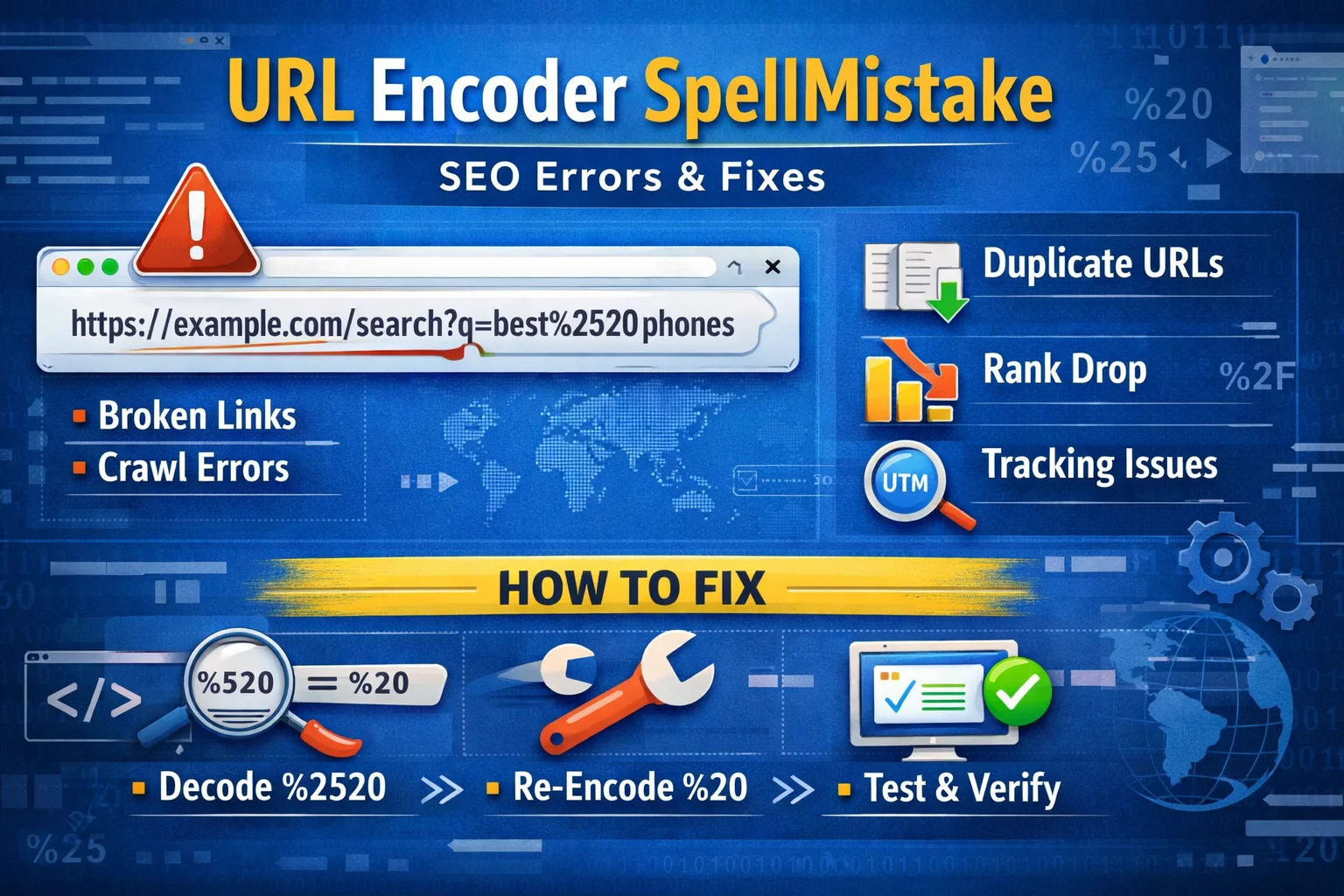
In the digital age, sharing links seems straightforward—just copy, paste, and send, right? But any web developer, marketer, or even casual internet user knows that URLs aren’t always as simple as they appear. A small oversight, like a typo or incorrect encoding, can render a link useless. This is where the concept of a URL encoder spellmistake comes into play. Understanding what it is, why it occurs, and how to fix it can save hours of frustration.
Understanding URL Encoding and Common Mistakes
At its core, URL encoding is a way to convert characters into a format that can be transmitted over the internet. Certain characters, such as spaces, symbols, or non-Latin alphabets, can break a URL if left unencoded. For instance, a space in a URL should be converted to %20.
However, mistakes happen. A URL encoder spellmistake occurs when a character is incorrectly encoded, misrepresented, or overlooked. This may be due to manual errors, faulty software, or even a simple copy-paste oversight.
Example:
- Correct:
https://example.com/search?q=hello%20world - Mistake:
https://example.com/search?q=hello world
Notice how the space in the incorrect URL can prevent the page from loading properly.
Why URL Encoder Spellmistakes Matter
You might think a small error in a link is harmless, but it can have major implications:
- Broken links – Users click, and the page doesn’t load.
- Poor SEO performance – Search engines may not index improperly encoded URLs.
- Security vulnerabilities – Incorrect encoding can expose URLs to injection attacks.
- Reduced user trust – Broken links in emails, ads, or social posts reflect poorly on your brand.
I personally experienced this when sharing a link to a client’s product catalog. One misplaced %2F caused half the items to vanish from search results, and it took me hours to debug.
Case Study: Handling URL Encoding Mistakes
Imagine a marketing campaign for an online store. You include a URL in your newsletter pointing to a specific product page. Due to a URL encoder spellmistake, the URL fails to load on some email clients. As a result, customers can’t reach the intended page, engagement drops, and the campaign underperforms.
By implementing proper encoding checks, such mistakes can be easily prevented, ensuring both smooth user experience and optimal SEO benefits.
Common URL Encoding Mistakes
To help visualize, here’s a comparison of frequent errors versus correct practices:
| Mistake Type | Example | Correct Version | Impact |
|---|---|---|---|
| Space not encoded | https://site.com/search?q=smart watch | https://site.com/search?q=smart%20watch | Page may not load |
| Special character misencoded | https://site.com/search?q=phone&tablet | https://site.com/search?q=phone%26tablet | Query split incorrectly |
| Unicode characters | https://site.com/naïve | https://site.com/na%C3%AFve | Broken link for some browsers |
| Manual typos | https://examplecom/page | https://example.com/page | DNS errors / 404 pages |
This table highlights how small errors can have disproportionately large effects on usability and performance.
How to Correct URL Encoder Spellmistakes
- Use Online Encoders/Decoders: Several free tools allow you to encode or decode URLs accurately. They handle spaces, symbols, and international characters automatically.
- Double-Check URLs: Before sharing links, test them in multiple browsers to ensure functionality.
- Validate Links in CMS: Most content management systems offer link validation tools. Use them to catch common mistakes.
- Leverage Automated Scripts: For developers managing bulk URLs, automated scripts can parse and correct encoding errors programmatically.
Comparing Manual vs. Automated Encoding
| Method | Pros | Cons | Use Case |
|---|---|---|---|
| Manual Encoding | Complete control over individual URLs | Time-consuming, prone to typos | Small campaigns or single links |
| Automated Encoder Tools | Fast, accurate, handles multiple URLs | May require learning tool or integration | Large-scale campaigns or bulk links |
| CMS Built-in Validation | Easy, integrated, no extra software | Limited customization | Blog posts, landing pages |
This comparison demonstrates how using the right approach based on your needs can prevent URL encoder spellmistakes from becoming a recurring problem.
Unique Approach to Minimizing URL Errors
One method I’ve found particularly effective is blending proactive testing with real-time monitoring. By integrating automated checks into content workflows, errors can be flagged immediately, rather than discovered after sending out links. This approach saves time and enhances reliability without relying solely on human review. It’s like having a safety net for your links—catching issues before they ever reach a customer.
Read More: Dropbox 8737.idj.029.22: Features, Benefits & Guide
Conclusion
URL encoder spellmistakes may seem minor, but they can create significant disruptions in web navigation, SEO performance, and user experience. By understanding encoding rules, using proper tools, and implementing systematic checks, these mistakes can be minimized or entirely avoided. Remember, a small %20 or %26 might be all that stands between a user clicking through or bouncing away.
FAQs
Q1: What is a URL encoder spellmistake?
A URL encoder spellmistake occurs when a URL is incorrectly encoded, causing broken links, errors, or misdirected pages.
Q2: How can I detect encoding errors in URLs?
Test links in multiple browsers, use online encoder/decoder tools, and validate links in your CMS.
Q3: Can URL encoding affect SEO?
Yes. Incorrectly encoded URLs can prevent search engines from indexing pages correctly and reduce visibility.
Q4: Are automated tools better than manual encoding?
Automated tools are faster and less error-prone, especially for bulk URLs, but manual checks are useful for smaller, high-priority links.
Q5: How can I prevent URL mistakes in email campaigns?
Use encoding tools, double-check URLs before sending, and test links on different email clients to ensure they function properly.


