






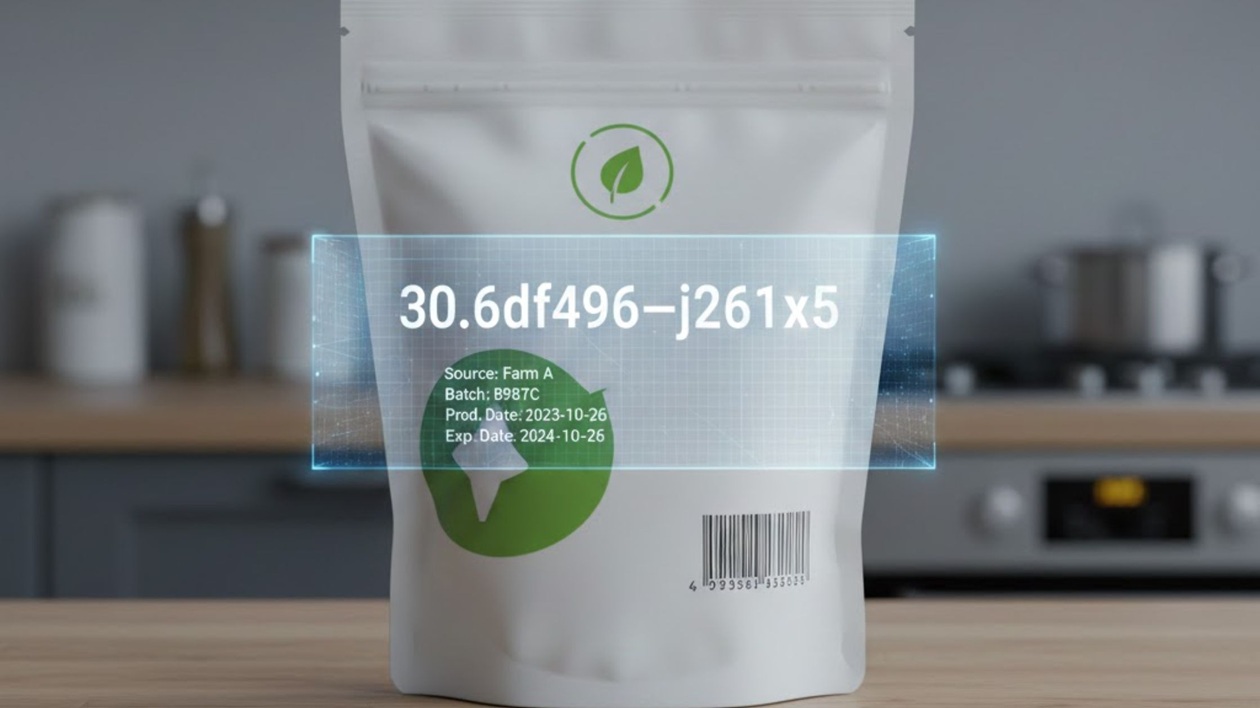
The term “30.6df496–j261x5 in food” looks unusual at first glance—almost like a system-generated identifier rather than something you’d normally associate with ingredients or recipes. Yet in today’s highly digitized food industry, strange alphanumeric strings like this are not as rare as they seem. They often appear in tracking systems, supply chain databases, laboratory reports, or automated labeling processes.
But what exactly does it mean? And should consumers be concerned when they encounter something like it? Let’s break it down in a practical, easy-to-understand way.
Understanding the Nature of “30.6df496–j261x5 in Food”
At its core, 30.6df496–j261x5 in food does not match any known ingredient name, additive code, or officially recognized food standard. Instead, it resembles a structured identifier, typically used in digital systems.
In modern food production environments, codes like this may represent:
- Batch tracking numbers
- Internal product classification IDs
- Lab testing references
- Supply chain shipment logs
- Automated barcode or QR system outputs
These identifiers are essential in large-scale food production, where thousands of items move through multiple checkpoints before reaching consumers.
Why Such Codes Exist in the Food Industry
Today’s food ecosystem depends heavily on traceability and automation. Every product, from packaged snacks to frozen meals, is often tracked digitally.
Here’s why such complex identifiers are used:
- Food Safety Tracking – Helps identify contamination sources quickly
- Inventory Control – Manages large-scale warehouse systems
- Regulatory Compliance – Ensures products meet legal standards
- Quality Assurance – Tracks production conditions and expiration cycles
- Logistics Optimization – Streamlines shipping and storage
These systems reduce human error and improve transparency across global food networks.
Practical Implementation in Food Systems
Imagine walking into a supermarket and scanning a QR code on a packaged meal. Instead of seeing a simple product name, you find a string like 30.6df496–j261x5 in the backend data.
This could represent a specific production batch made in a factory line on a particular date, using tracked ingredients from multiple suppliers. If any issue arises—such as contamination or labeling error—the code helps identify every affected unit within minutes.
Without such identifiers, recalls would be chaotic and far less precise.
Comparison: What This Code Might Represent
To better understand how this type of identifier works, here’s a simple comparison:
| Type of Identifier | Example | Purpose in Food Industry | Visibility to Consumer |
|---|---|---|---|
| Batch Number | BN-2045-A | Tracks production batch | Sometimes visible |
| Barcode System ID | 8901234567890 | Retail scanning & pricing | Visible on packaging |
| Internal Trace Code | 30.6df496–j261x5 | System-level tracking | Usually hidden |
| Expiry Code | EXP-2026-09 | Shelf-life management | Visible |
| Lab Reference ID | LAB-88392X | Safety testing records | Hidden |
This comparison shows that 30.6df496–j261x5 in food most closely resembles an internal trace code rather than a consumer-facing label.
How It Connects to Modern Food Technology
Food systems are no longer simple production lines—they are data-driven ecosystems. Every step, from farming to packaging, is recorded digitally.
Advanced technologies involved include:
- Blockchain-based supply chain tracking
- AI-driven inventory management
- Automated labeling machines
- IoT sensors in storage facilities
In such environments, codes like 30.6df496–j261x5 help maintain structured digital records across thousands of operations happening simultaneously.
A Personal Observation
I once came across a similar alphanumeric string while checking a packaged frozen food item’s QR data, and it surprised me how much hidden information exists behind something so ordinary on the shelf.
Why Consumers Notice These Codes
Most consumers never interact directly with system-level identifiers. However, they sometimes appear due to:
- Scanned QR code metadata
- Debug or system error displays
- Transparency tools from food apps
- Export/import documentation leaks
When seen out of context, they can look confusing or even suspicious—but in reality, they are usually harmless technical references.
Potential Misinterpretations
Because codes like 30.6df496–j261x5 in food are not user-friendly, they can lead to confusion. Some people mistakenly assume:
- It is a chemical additive
- It indicates contamination
- It is a secret ingredient code
- It represents a product defect
In most cases, none of these assumptions are accurate. Instead, it is simply a backend tracking marker.
How to Verify If a Food Code Is Legitimate
If you ever encounter a similar identifier on packaging or digital records, here are safe ways to verify it:
- Check official brand websites for batch lookup tools
- Use food safety authority portals in your country
- Scan QR codes through verified retailer apps
- Contact customer support for clarification
- Cross-check expiry and manufacturing details
These steps help ensure transparency and consumer confidence.
The Broader SEO and Digital Perspective
From a digital content perspective, unusual queries like “30.6df496–j261x5 in food” often emerge from:
- Search engine indexing of internal database strings
- User curiosity about unknown codes
- AI-generated or system-generated labels appearing online
- Misinterpreted technical logs
Such keywords reflect how modern search behavior is evolving—people are increasingly exposed to technical data without context.
Unique Insight: Why These Codes Matter More Than They Seem
Even though they look meaningless, identifiers like this form the backbone of global food traceability systems. Without them, ensuring food safety across continents would be nearly impossible.
They enable:
- Faster recalls
- Accurate supplier accountability
- Better quality control
- Consumer protection at scale
So while 30.6df496–j261x5 in food may look random, it represents a structured system working silently in the background.
Also Read: 1.5f8-p1uzt Texture Explained for Digital Design Use
Conclusion
The keyword 30.6df496–j261x5 in food does not point to a known ingredient or public food standard. Instead, it strongly resembles an internal tracking or system-generated identifier used in modern food supply chains.
While it may appear confusing at first, such codes play a crucial role in ensuring food safety, traceability, and efficiency in global production systems. Understanding them helps consumers better appreciate the complexity behind everyday food products.
FAQs
1. Is 30.6df496–j261x5 a food ingredient?
No, it does not match any recognized food ingredient or additive.
2. Why do such codes appear in food systems?
They are used for internal tracking, batch management, and supply chain control.
3. Should consumers worry about this code?
No, it is typically a harmless system identifier, not a safety concern.
4. Can I trace food using this code?
In some advanced systems, yes—if the brand provides traceability tools.
5. Is this code visible on packaging?
Usually not; it is mostly used in backend databases or digital systems.
6. What is the main purpose of such identifiers?
They help ensure food safety, quality control, and efficient logistics management.


