






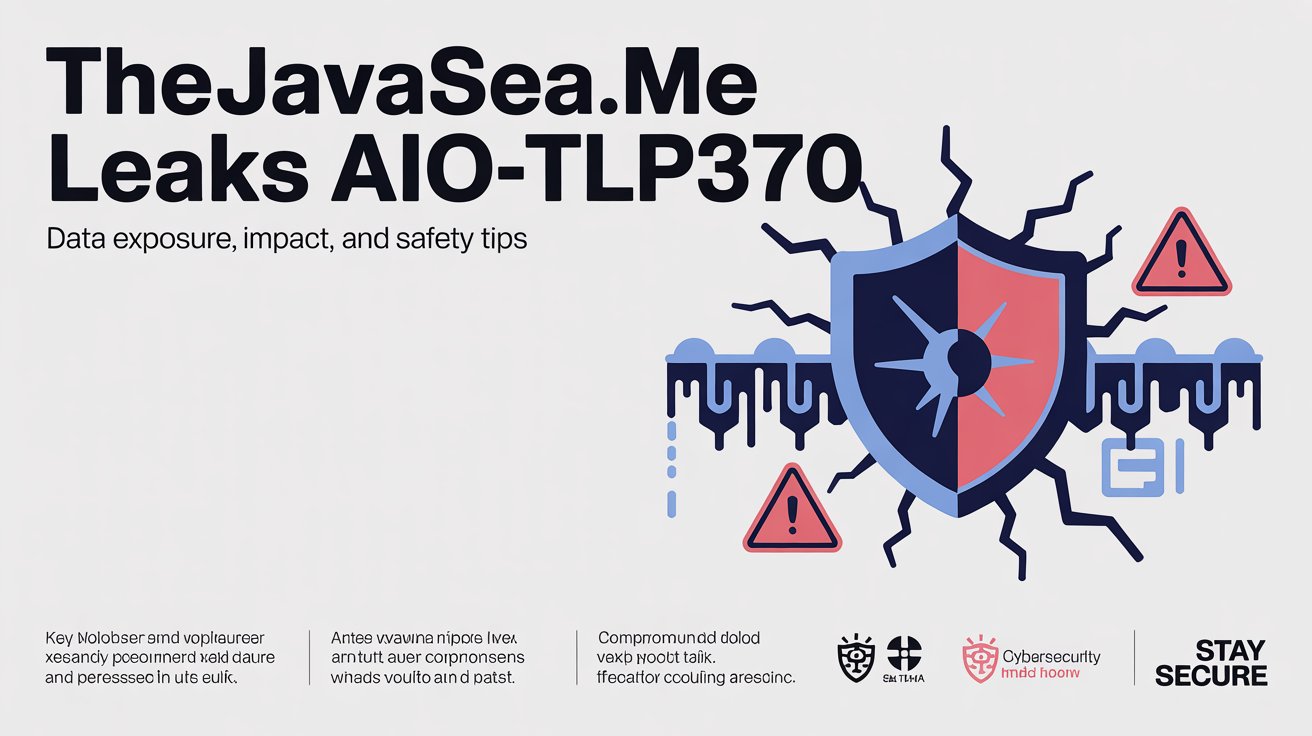
The internet has become a massive repository of information, but it has also evolved into a landscape where data leaks and unauthorized disclosures regularly make headlines. One topic that has recently generated attention across online communities is thejavasea.me leaks aio-tlp370. People searching for this term often want to understand what it refers to, why it is being discussed, and what implications it may have for users, organizations, and digital security.
While information surrounding such leaks can sometimes be fragmented or difficult to verify, understanding the broader context is essential. Data exposure incidents can have significant consequences, ranging from privacy violations to financial losses and reputational damage. This article explores the subject in a clear and practical way, helping readers understand the risks, concerns, and lessons associated with online data leaks.
Understanding the Term AIO-TLP370
The phrase AIO-TLP370 appears to be associated with a collection, package, or dataset reportedly referenced in discussions surrounding leaked digital information. In many online communities, the abbreviation “AIO” often stands for “All-In-One,” suggesting a bundled collection of files, records, or resources.
When terms like these surface alongside leak-related discussions, they generally indicate that a substantial amount of data may have been gathered and distributed without authorization. However, users should always approach such claims carefully, as online discussions can contain misinformation, exaggeration, or incomplete details.
The growing interest in thejavasea.me leaks aio-tlp370 reflects a wider concern about cybersecurity, privacy, and the unauthorized sharing of sensitive information.
Why Data Leaks Attract So Much Attention
Leaks often generate significant interest because they can affect individuals, businesses, and institutions alike. Whether the exposed information includes account credentials, personal records, internal documents, or proprietary resources, the consequences can be far-reaching.
Several factors contribute to the attention surrounding data leaks:
- Potential exposure of private information
- Risks of identity theft
- Unauthorized access to online accounts
- Corporate security concerns
- Financial fraud opportunities
- Public curiosity regarding the source and scale of the leak
In today’s connected environment, even a relatively small breach can impact thousands of users within hours.
How Online Leaks Typically Occur
Understanding how information becomes exposed helps explain why incidents associated with leak repositories continue to emerge.
Common causes include:
Weak Security Configurations
Organizations sometimes leave databases, servers, or cloud storage systems improperly configured. These vulnerabilities can provide attackers with direct access to sensitive information.
Credential Theft
Cybercriminals frequently obtain usernames and passwords through phishing attacks, malware infections, or credential-stuffing campaigns.
Insider Threats
Employees, contractors, or individuals with privileged access may intentionally or accidentally expose confidential data.
Software Vulnerabilities
Unpatched applications and outdated systems remain among the leading causes of unauthorized access incidents.
I once reviewed a small company’s security setup and was surprised to find several outdated applications still connected to critical systems, highlighting how overlooked vulnerabilities can create serious risks.
Potential Risks Associated With Leaked Data
When information becomes publicly accessible through leak platforms or unauthorized repositories, the consequences can extend beyond the initial breach.
Identity Theft
Personal information can be exploited to create fraudulent accounts or impersonate individuals.
Financial Fraud
Exposed payment details, banking information, or account credentials may lead to unauthorized transactions.
Privacy Violations
Sensitive communications, personal documents, and private records can become accessible to unintended audiences.
Business Disruption
Organizations may experience operational interruptions, legal complications, and reputational damage following a significant leak.
Long-Term Security Threats
Leaked information can remain available online for years, increasing ongoing risks for affected individuals.
Comparing Secure Data Management and Leak Exposure
The following table highlights key differences between properly protected information and data that becomes exposed through unauthorized channels.
| Factor | Secure Data Environment | Leaked Data Environment |
|---|---|---|
| Access Control | Restricted and monitored | Often publicly accessible |
| User Privacy | Protected through safeguards | Potentially compromised |
| Legal Compliance | Maintained | Frequently violated |
| Business Reputation | Preserved | May suffer significant damage |
| Financial Risk | Minimized | Increased substantially |
| Data Integrity | Managed carefully | Difficult to verify or control |
This comparison demonstrates why organizations invest heavily in cybersecurity measures and risk management programs.
A Real-World Scenario
Imagine an online service used by thousands of customers. The platform stores user profiles, contact information, and account credentials. Due to a security oversight, attackers gain access to an internal database.
Within days, portions of the information begin circulating through leak-sharing communities. Customers start receiving phishing emails that appear legitimate because attackers possess accurate personal details. Some users unknowingly disclose additional credentials, expanding the damage beyond the original breach.
This scenario illustrates how a single exposure event can trigger a chain reaction affecting both organizations and individuals.
How Users Can Protect Themselves
Although individuals cannot always prevent leaks from occurring, they can reduce their exposure to potential harm.
Use Unique Passwords
Avoid reusing passwords across multiple websites. If one account becomes compromised, unique credentials help prevent attackers from accessing additional services.
Enable Multi-Factor Authentication
Adding an extra verification step significantly strengthens account security.
Monitor Account Activity
Regularly review account logins, financial statements, and security notifications.
Stay Alert for Phishing Attempts
Attackers often leverage leaked information to craft convincing fraudulent messages.
Update Software Frequently
Security updates address vulnerabilities that could otherwise be exploited.
Limit Shared Information
Reducing the amount of personal information available online lowers potential exposure risks.
The Broader Cybersecurity Lesson
Discussions surrounding thejavasea.me leaks aio-tlp370 highlight a broader reality: digital security is no longer solely an IT concern. It affects businesses, consumers, educators, healthcare providers, and government institutions alike.
As data collection continues to expand, organizations must prioritize security from the earliest stages of development rather than treating it as an afterthought. Likewise, individuals benefit from adopting proactive habits that reduce their vulnerability to cyber threats.
The most effective protection comes from a combination of strong technology, informed decision-making, and continuous vigilance.
Why Responsible Information Handling Matters
Whenever information is exposed without authorization, the consequences often extend beyond technical systems. Trust is affected. Customers question whether their information is safe. Businesses face scrutiny from regulators and stakeholders. Individuals may spend months recovering from identity theft or fraud.
Responsible data management therefore becomes more than a compliance requirement—it is a fundamental element of digital trust. Organizations that invest in security controls, employee training, and transparent incident response procedures are better positioned to reduce risks and maintain confidence among users.
Read More: 2579xao6 Code Bug: Causes, Fixes and Prevention Guide
Conclusion
The growing interest in thejavasea.me leaks aio-tlp370 reflects ongoing concerns about online privacy, cybersecurity, and unauthorized data exposure. While specific details surrounding leak-related discussions may vary and should always be evaluated carefully, the broader lessons remain clear.
Data leaks can create serious risks for individuals and organizations alike, including privacy violations, financial losses, and reputational harm. Understanding how these incidents occur and adopting stronger security practices can help reduce vulnerability in an increasingly connected world.
As digital information continues to grow in value, awareness and proactive security measures remain among the most effective defenses against potential threats.
FAQs
What does thejavasea.me leaks aio-tlp370 refer to?
The term is commonly associated with online discussions involving allegedly leaked digital information or data collections. Specific claims should always be verified through reliable sources.
Are data leaks dangerous for regular users?
Yes. Exposed information can contribute to identity theft, phishing attacks, financial fraud, and privacy concerns.
How can I check whether my information has been exposed?
Users can monitor account activity, security alerts, password changes, and notifications from service providers regarding potential breaches.
What should I do if my account credentials are leaked?
Immediately change passwords, enable multi-factor authentication, review account activity, and update credentials on other accounts that may use similar login information.
Why do organizations experience data leaks?
Common causes include weak security configurations, phishing attacks, insider threats, software vulnerabilities, and inadequate cybersecurity practices.
Can leaked information remain online permanently?
In some cases, yes. Once data is distributed across multiple platforms or repositories, completely removing it can become extremely difficult.


